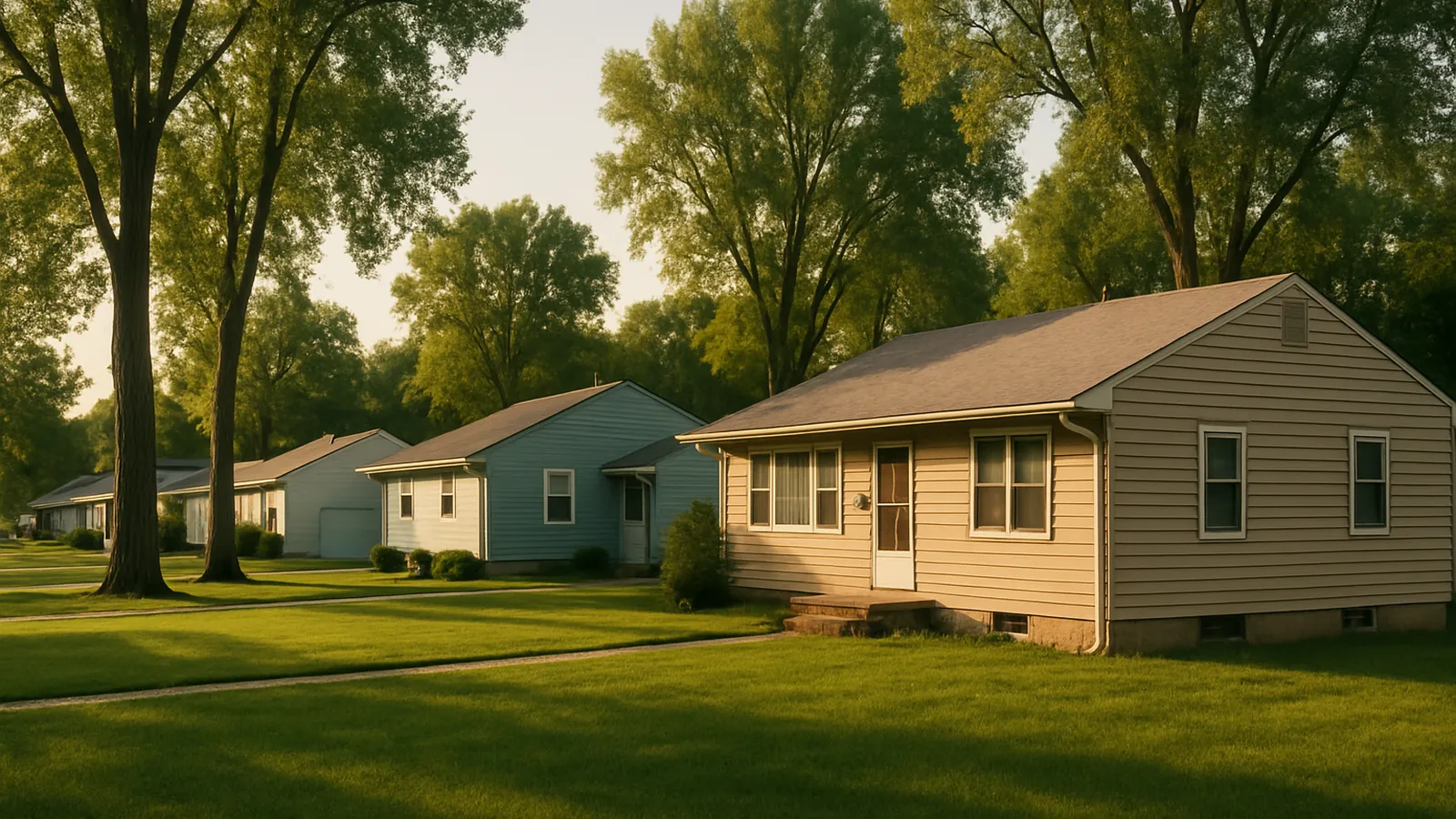
Foundation repair in Auburn runs $4,000–$15,000 for most full repairs, with piers $1,200–$3,000 each and bowing wall repair $2,500–$10,000. Shrink-swell clay cycles between wet springs and dry Kansas summers, and full basements make wall movement the signature failure here.
The transition zone, and why it changes pier depth
Head southwest from Topeka and the ground begins to change. The deep valley alluvium and thick upland loess give way toward the Osage Cuestas — the belt of alternating limestone and shale that shapes eastern Kansas south of the Kansas River. Bedrock sits closer to the surface out here than it does north of the river, and that has one very practical consequence.
Piers reach refusal faster. Where a Jefferson County pier may travel a long way through glacial till and loess before finding bearing, an Auburn pier can hit competent material much sooner. That usually means fewer pier sections per location and a lower price — but only if the crew is logging refusal pressure rather than driving to a number someone specified in the office. Shallow refusal that is genuinely rock reads differently from shallow refusal that's a stiff clay lens, and the pressure log is how you tell.
Rural lots, longer water paths
Auburn properties tend to be larger than city lots, and larger lots move more water. Runoff crosses more ground before it reaches the house, picks up more volume, and frequently arrives from a direction that isn't obvious from the yard. Evaluations here spend more time outside than a subdivision call does — walking where the lot drains, where the neighboring ground sends water, and where a driveway or an outbuilding has changed the path since the house was built.
The same clay, a shorter fuse
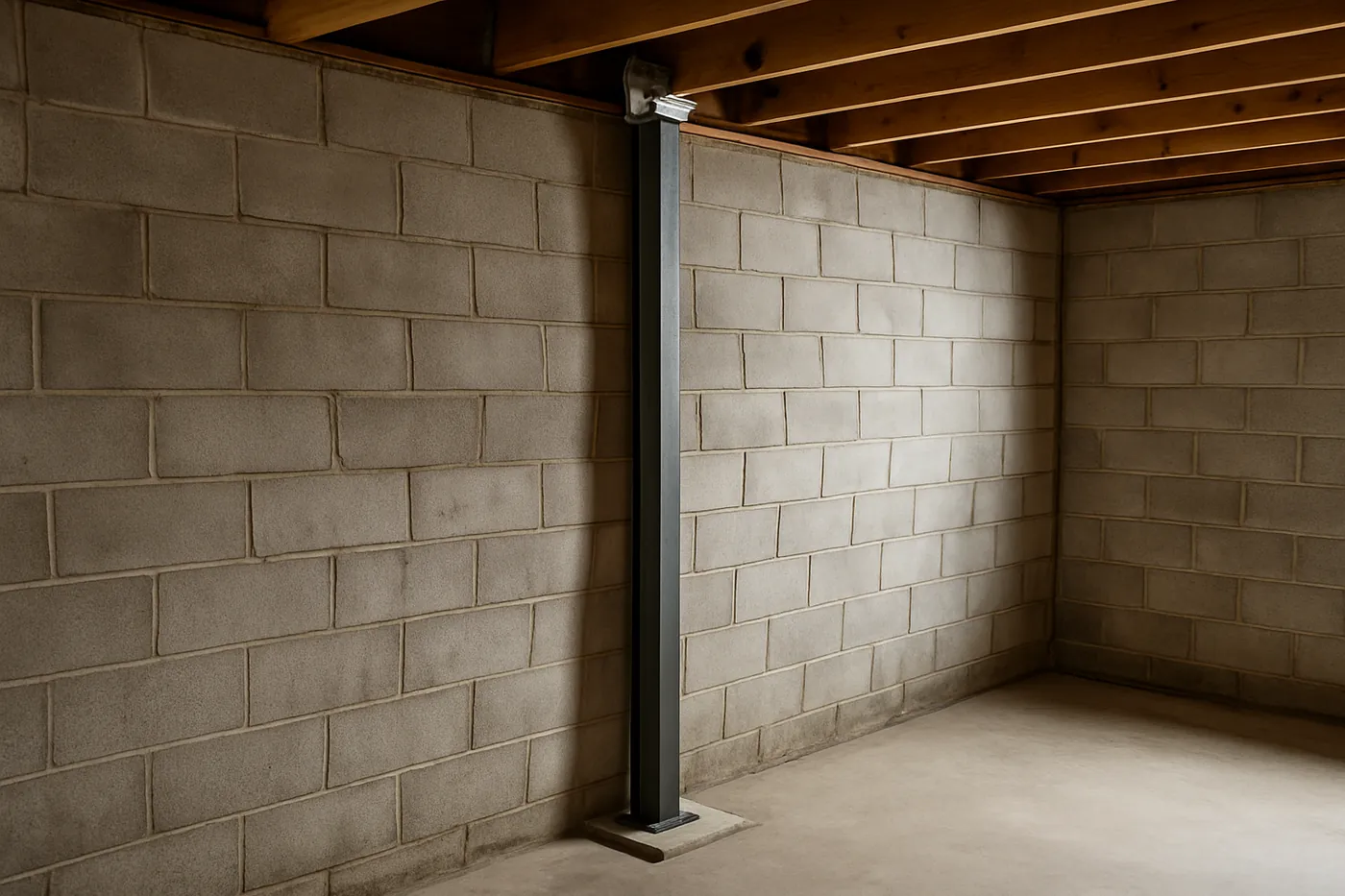
Shrink-swell clay still does its work here, and full basements are still the norm, so wall movement remains the failure to watch for. What differs is the soil column above bedrock: thinner, which can mean the moisture cycle reaches the footing more directly. A plumb line on the basement walls is the five-minute check worth doing before anything else.
Asked in Auburn
Why would piers cost less out here than in Topeka?
Shallower bedrock. Auburn sits toward the Osage Cuestas, where limestone and shale are closer to the surface than in the deep loess north of the Kansas River, so piers often reach competent bearing with fewer sections. Piers are priced per section, so shorter piers cost less.
How do you know a pier hit rock and not just stiff clay?
Refusal pressure, logged per pier. Competent rock produces a different pressure signature than a stiff clay lens that a pier could eventually punch through. On transitional ground like this that log is the documentation separating engineered work from hopeful work — ask to see it on any bid.
Our lot is large. Does that change the evaluation?
It lengthens the outside portion. Larger lots collect and route more runoff before it reaches the house, often from a direction the yard doesn't suggest. Evaluations here spend real time walking the water path, because out here that path explains more crack patterns than the cracks do.
Are basement walls still the main concern here?
Basement walls are still the main concern here. Full basements are the norm and shrink-swell clay still does its work, so inward wall movement remains the failure to watch for. A plumb line dropped from the top of each basement wall is the five-minute check worth doing before anything else.
Getting eyes on a Auburn foundation
Evaluations in Auburn schedule within days — book below or call. Already holding another bid? Bring it; our scope shows the measurements behind every line, which makes comparison fast. The cost guide explains each number, and service areas covers the rest of the region.
Get a free Topeka foundation evaluation
Tell us what the house is doing — a basement wall leaning in, stair-step cracks, doors that stick every August, sloping floors — and we’ll schedule an evaluation with photos, wall measurements, and floor elevations. We reply the same business day.