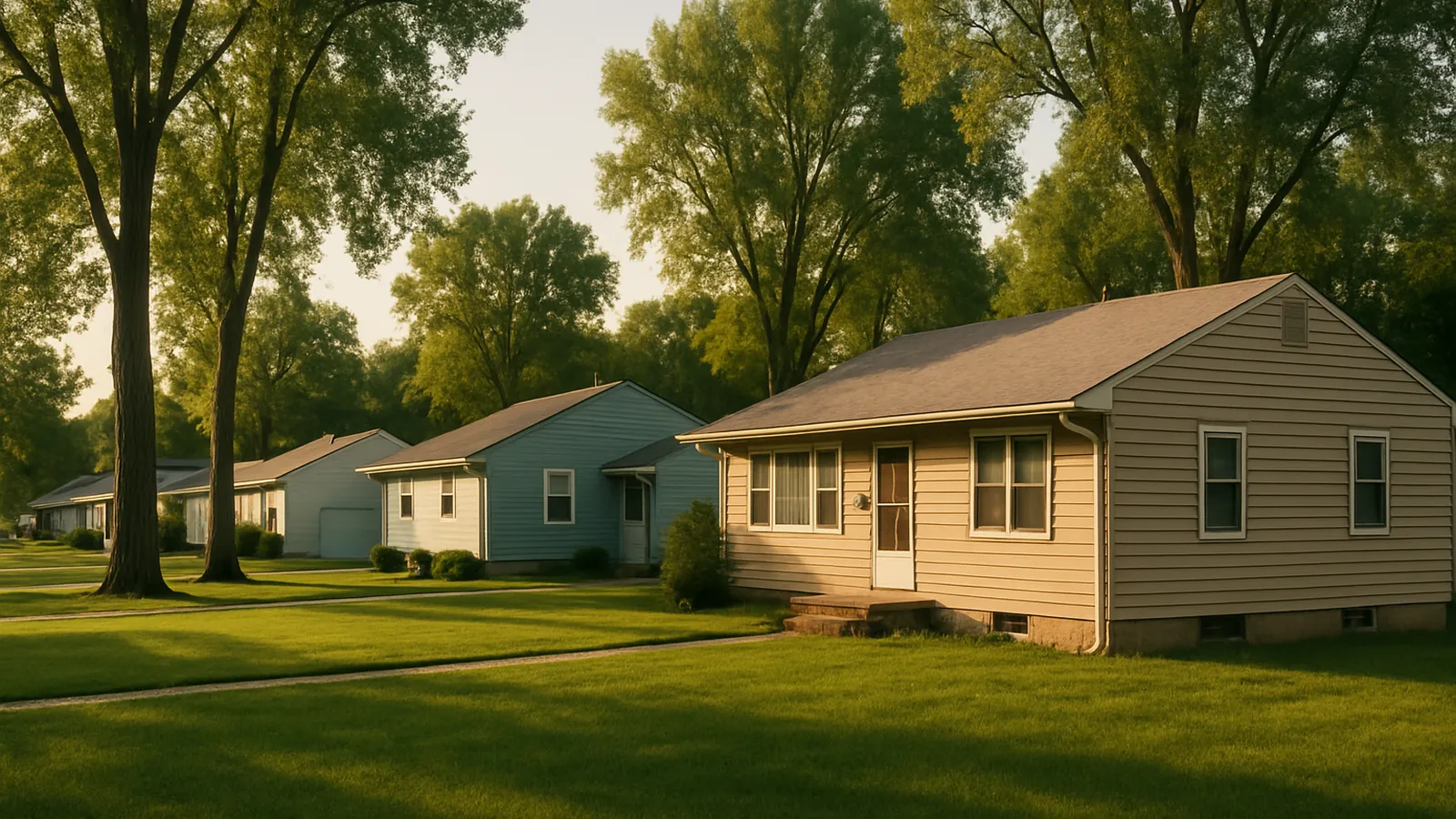
Silver Lake homeowners pay $4,000–$15,000 for most structural foundation repairs, from about $400 for a single crack injection. Clay withdrawing support through a dry August and pressing back each spring is the mechanism — and it's what a measured evaluation is built to detect before it worsens.
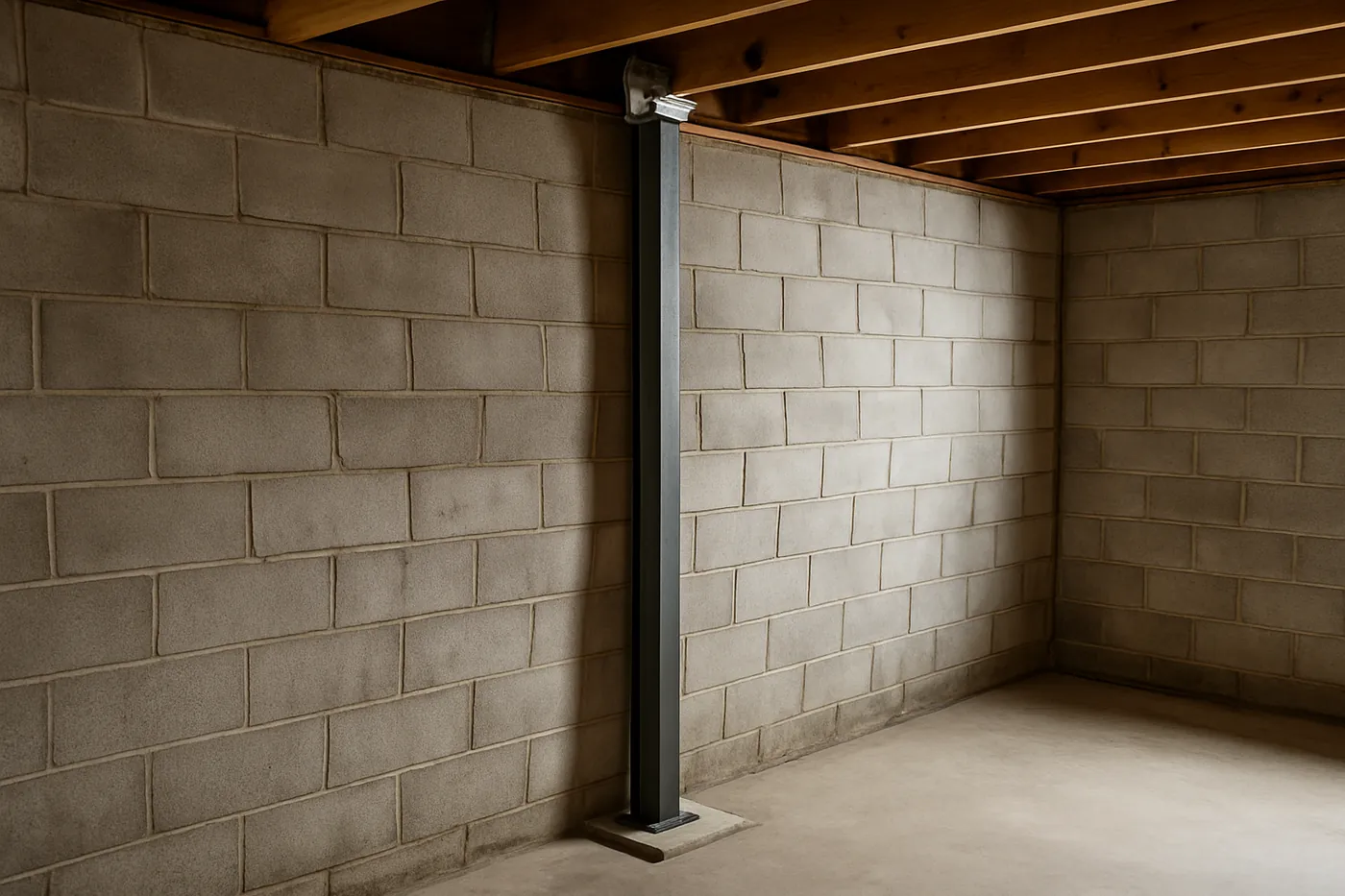
River-laid ground varies more than it looks
Silver Lake sits on the Kansas River valley floor, on alluvium the river deposited over thousands of years — and alluvium is not one material. Old channel positions left sandier lenses; slackwater areas left heavier silt and clay. The visible result is a table-flat landscape that suggests uniformity, while two houses on the same street can present genuinely different bearing conditions a few feet down.
That's why we measure Kaw valley lots rather than applying a template. Refusal depth on a pier can differ substantially within a single property here, and a crew driving every pier to the same specified depth is guessing at exactly the place where guessing costs the most.
A high water table and a flood history
Valley-floor lots carry a water table closer to the surface than the uplands around Topeka, and the Kansas River's flood history in this valley is not abstract — the 1951 flood remains the benchmark event for the whole Kaw corridor. For foundations, the practical consequences are steady: basements here work against groundwater as well as storm water, sump systems earn their battery backups, and a discharge line needs to end somewhere the flat ground won't return it.
What that means for the repair mix
Scopes in Silver Lake lean toward drainage design and sump capacity, with structural work priced where the survey genuinely shows movement rather than as a default. The seasonal shrink-swell ratcheting that dominates upland Shawnee County is usually milder on bottomland that stays damper year-round — a real advantage, traded for a water problem instead.
Asked in Silver Lake
Why would two houses on my street need different repairs?
Because river-laid soil isn't uniform. Old channel positions left sandier lenses and slackwater areas left heavier silt and clay, so bearing conditions vary over short distances beneath ground that looks table-flat. That's exactly why we measure each lot instead of applying a valley template.
Does the flood history here still matter?
For foundations, what matters day to day is the water table rather than any single event — valley-floor lots sit closer to groundwater than the uplands around Topeka. Practically that means sump capacity, battery backup, and a discharge line that ends somewhere flat ground won't return it.
Is the clay problem better or worse in the valley?
Generally milder. Bottomland that stays damper year-round doesn't swing as hard as upland clay, which softens the seasonal ratcheting that bows basement walls elsewhere in Shawnee County. You trade that advantage for a higher water table, so the repair mix shifts toward drainage.
What does an evaluation cost in Silver Lake?
Nothing. Photos, crack measurements, wall plumb readings, laser floor elevations, and a written scope with fixed line prices are free — including the visits that end with a recommendation to monitor rather than repair.
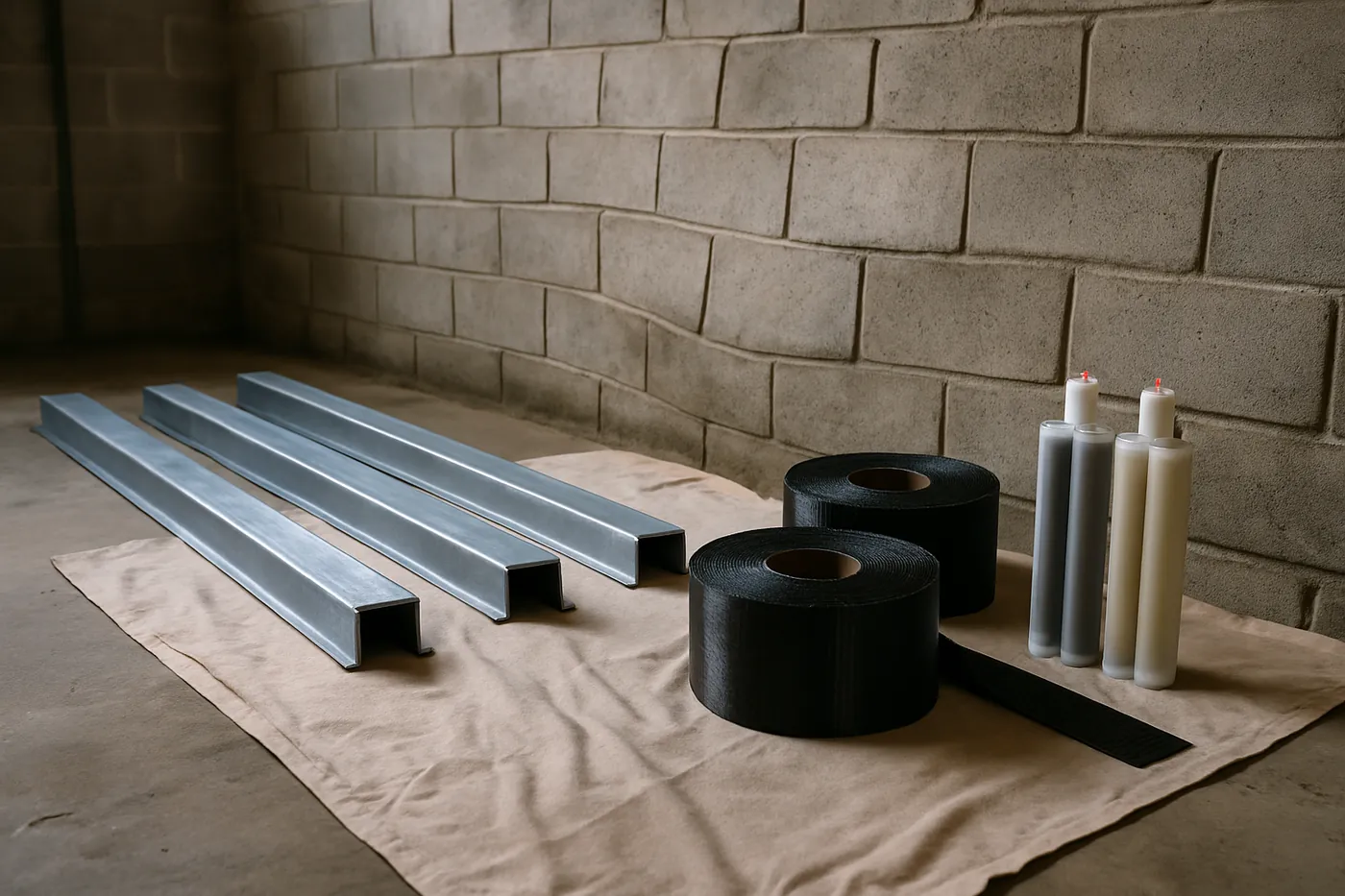
Next step for your Silver Lake house
Drop a plumb line on the basement wall, mark and date any crack, then get the baseline — knowing is cheap. The free evaluation takes about an hour and leaves a written report with wall deflection and floor elevations. Costs are itemized in the cost guide; nearby communities are under service areas.
Get a free Topeka foundation evaluation
Tell us what the house is doing — a basement wall leaning in, stair-step cracks, doors that stick every August, sloping floors — and we’ll schedule an evaluation with photos, wall measurements, and floor elevations. We reply the same business day.