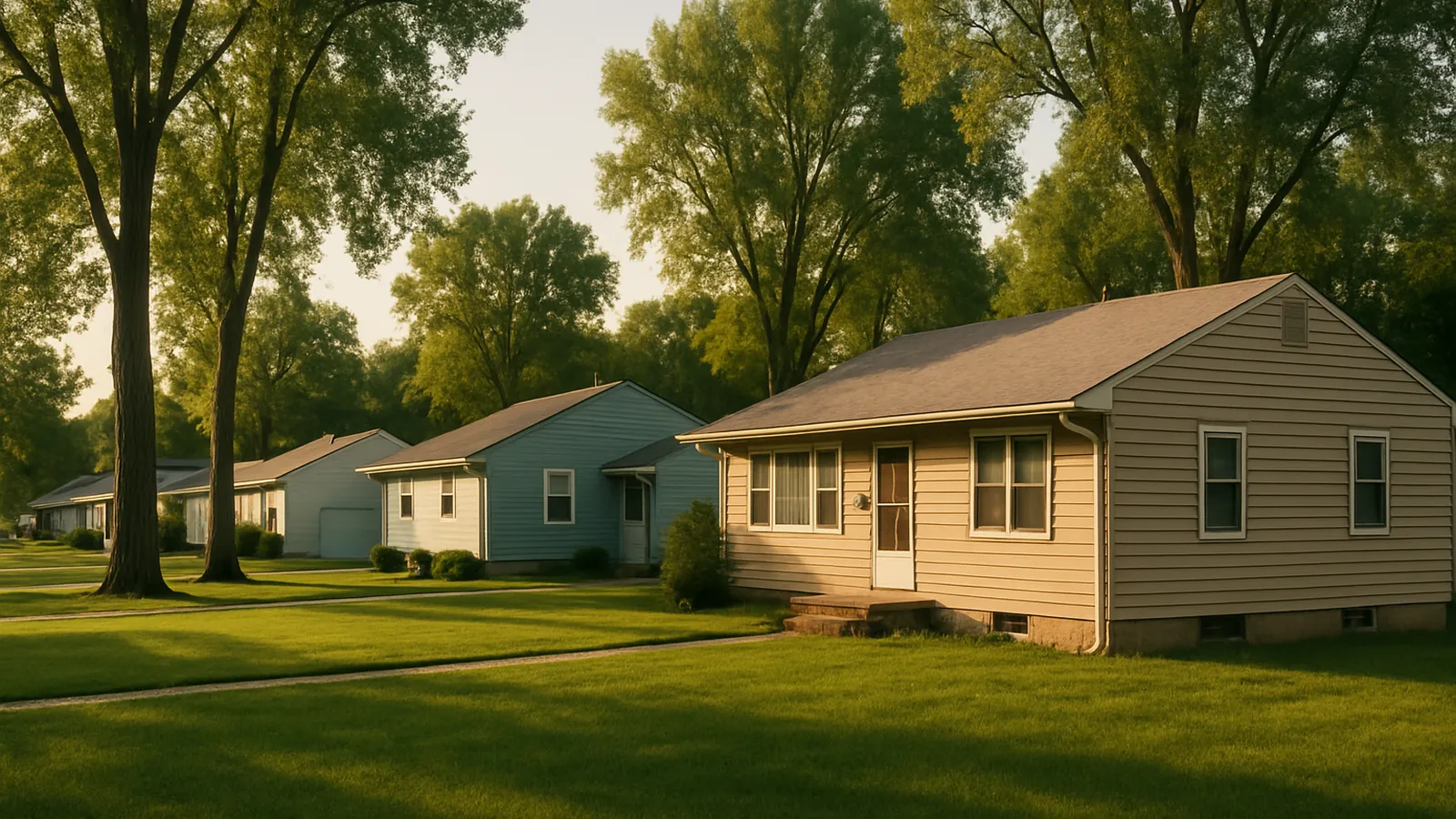
Foundation settlement repair in Topeka runs $4,000–$15,000 — steel piers at $1,200–$3,000 each, placed where a floor-elevation survey shows the footing dropped. Shawnee County’s shrink-swell clay contracts through dry late summers, and the footing follows it down.
What settlement is on this soil, how to read the signs, and what fixing it involves.
What settlement means on Shawnee County soil
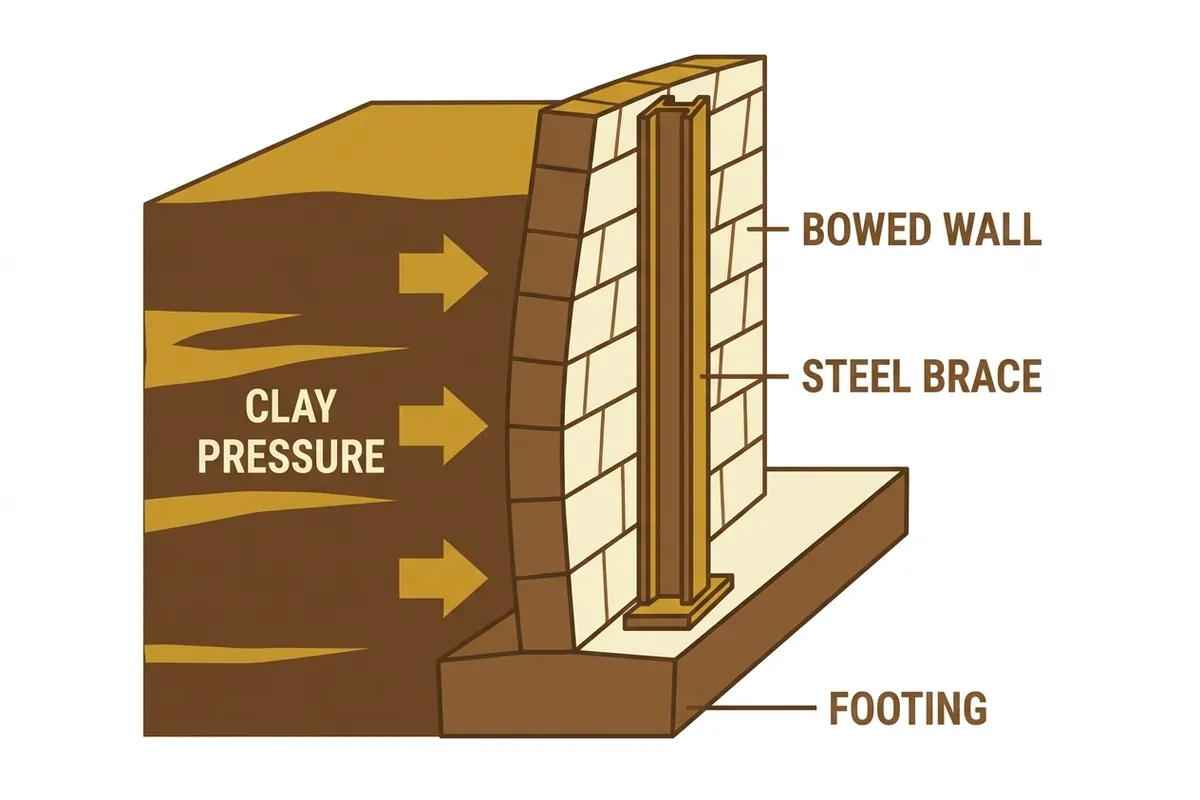
Topeka sits on deep silty clay loams over glacial and loess deposits in the Kansas River valley, and the clay fraction changes volume with moisture. Roughly 36 inches of rain arrives mostly as wet springs; late summers run dry. The soil swells, then shrinks, and a foundation rides that cycle. Uniform settlement — the whole house easing down together — cracks little and mostly goes unnoticed. Differential settlement is the problem: one footing run drops while the rest holds, and the frame above it racks until drywall, brick, and door frames report the difference.
Which part drops isn’t random. It’s commonly the south or west exposure that bakes driest in August, the corner where a downspout concentrates water, or — north of the river, toward Oakland and NOTO — ground where windblown loess collapses when water finally reaches depths that had stayed dry for decades.
The signs, and what each usually means
| What you see | What it usually means | First move |
|---|---|---|
| Stair-step cracks in brick or block | Differential settlement — widest crack sits nearest the dropped footing | Photograph and measure widths |
| Doors sticking on one side of the house | Frames racking as the wall behind them drops; seasonal sticking is the clay cycle, steady worsening is accumulation | Note which season it worsens |
| Sloping floors toward one corner | Settlement on that footing run; a hump in the middle is more often heave | Marble test, then a laser survey |
| Drywall cracks at window and door corners | Stress concentrating at openings — interior finishes report before masonry does | Date and measure them |
| Basement wall crack wider at top than bottom | The footing rotated as it dropped | Measure promptly — rotation compounds |
None of these alone prices a repair. A floor-elevation survey and crack measurements turn the list into a map of what moved, how far, and whether it’s still moving — that’s what our free evaluation documents.
Settlement or heave — the diagnosis that changes everything
Both produce cracks and out-of-level floors, and they take opposite repairs. Settlement is the soil giving way beneath a footing; piers fix it. Heave is the clay swelling and lifting from below — commonly fed by a slab plumbing leak or years of over-watering along one wall — and piers make heave worse by holding the house down against a rising floor. The elevation survey plus a look at where the water is tells them apart. This is also why we put instruments before opinions: the two conditions can look identical from the driveway.
How the repair works
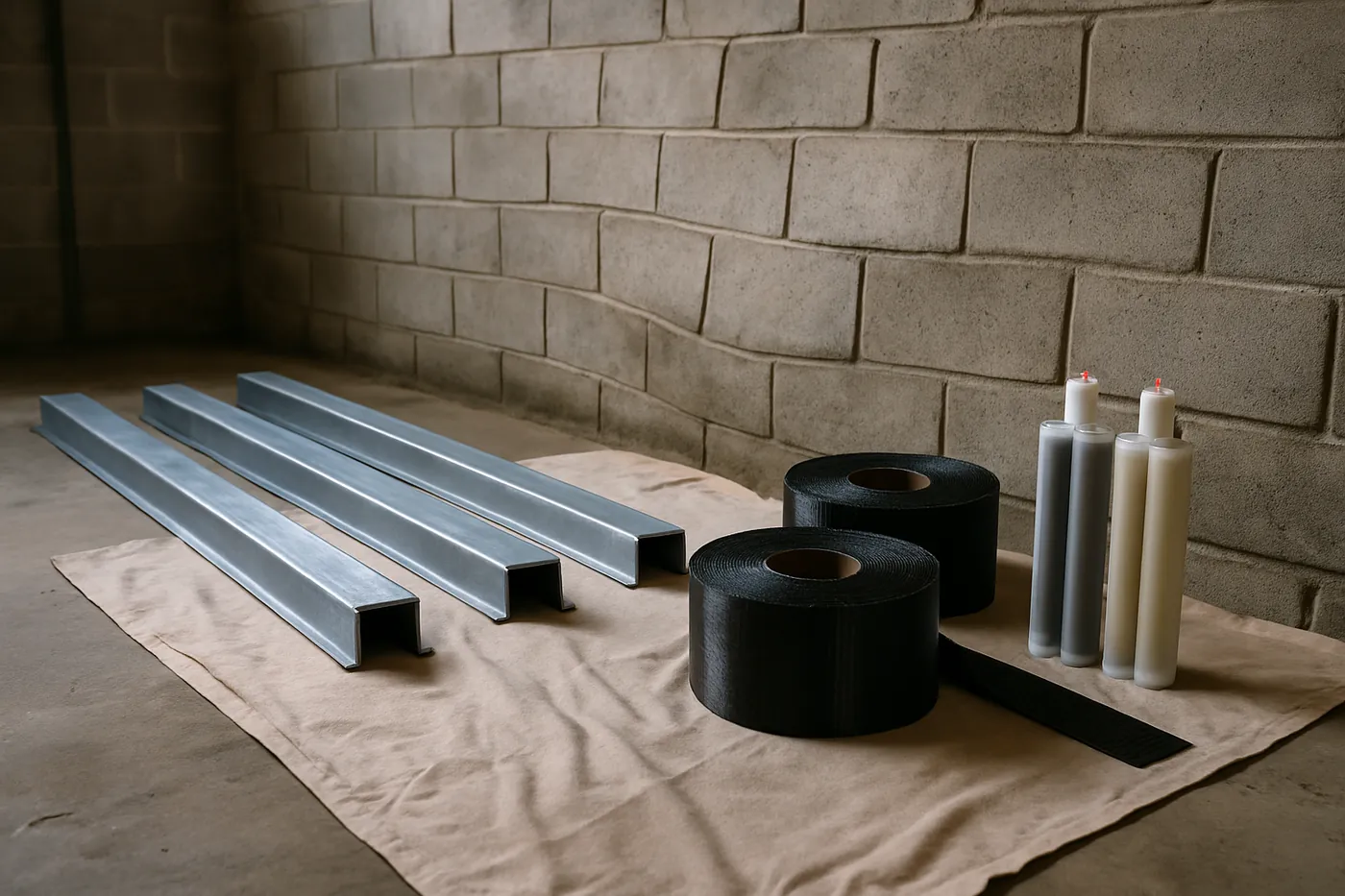
Steel piers are driven hydraulically beside the dropped footing, through the active soil zone, until they refuse further advance against stable bearing — with refusal pressure logged per pier. Brackets transfer the footing’s load onto the piers, and lift is attempted where the structure can safely take it, monitored against interior crack widths in real time. The full mechanics — depths, bracket types, sequencing around a finished basement — are on our foundation piering page. Where cracked walls or masonry need sealing and reinforcement afterward, crack repair closes out the cosmetic and moisture side of the same event.
What settles the price
- Pier count — set by the affected run, not the size of the house. Counts cluster along one side far more often than they circle the perimeter.
- Depth to refusal — Kaw valley alluvium, the glaciated ground north of the river, and the shallower bedrock south of it each put stable bearing at different depths.
- Lift vs stabilize — recovering elevation takes more monitoring time than locking the house where it stands.
- The water that caused it — if a drainage fault drove the settlement, correcting the water belongs in the same scope, or the clay resumes its schedule.
Our Topeka cost guide breaks every one of these ranges down line by line, with what pushes a job toward each end.
The first year after the piers
Piers stop the movement; they don’t erase its history. Give the house a full seasonal cycle before chasing cosmetics — in the Kaw Valley that means a wet spring, a dry late summer that shrinks the same clay loam, and a winter of freeze-thaw. Hairline cracks can breathe through all three, so patch drywall and re-point brick after the year is out and you patch once. Monitoring costs nothing: a dated photo plus a pencil line drawn across each crack answers “did it move?” in ten seconds. Keep the pier log with your closing documents, too. A Topeka buyer’s inspector will find the brackets in the basement regardless; the difference between a red flag and a selling point is whether you can hand over the paperwork.
Settlement questions, straight answers
How do I know it's settlement and not something else?
Settlement drops part of the house; clay heave lifts part of it. The floor-elevation survey tells them apart in an hour: settlement shows a low spot that maps to one footing run, usually the side that dries hardest in a Kansas August. Heave shows a high ridge, often over a plumbing leak that's been feeding the clay under the slab.
Is settlement in Topeka an emergency?
Rarely in the meeting-an-ambulance sense, but it is progressive. Each dry-summer cycle moves the footing a little further, and repair cost tracks how far it has moved. A quarter-inch of drop caught early is a three-pier job; the same corner left through five more summers can double the count. Measure now, decide with numbers.
Can settlement fix itself when the rain comes back?
The clay re-swells in a wet spring and a floor can rise part-way back — which is exactly the ratcheting that damages houses. The soil never returns to its original volume, debris falls into the shrinkage gaps, and the footing rides a little lower each cycle. Seasonal recovery is a symptom of the problem, not the end of it.
Does fixing drainage stop settlement without piers?
Sometimes, if it's caught early and the cause is concentrated water — a downspout dumping at a corner, grading that ponds against one wall. Steadying the moisture steadies the clay. Once a footing has visibly dropped, drainage alone won't lift it back; that takes piers. We'll tell you which case you are, with elevations to back it.
What does settlement repair cost in Topeka?
Most full repairs run $4,000 to $15,000 — steel piers at $1,200 to $3,000 each, and most houses need three to eight, placed where the survey shows the footing actually dropped. The written scope prices each pier location individually so you can see exactly what drives your number before any work starts.
Get a free Topeka foundation evaluation
Tell us what the house is doing — a basement wall leaning in, stair-step cracks, doors that stick every August, sloping floors — and we’ll schedule an evaluation with photos, wall measurements, and floor elevations. We reply the same business day.