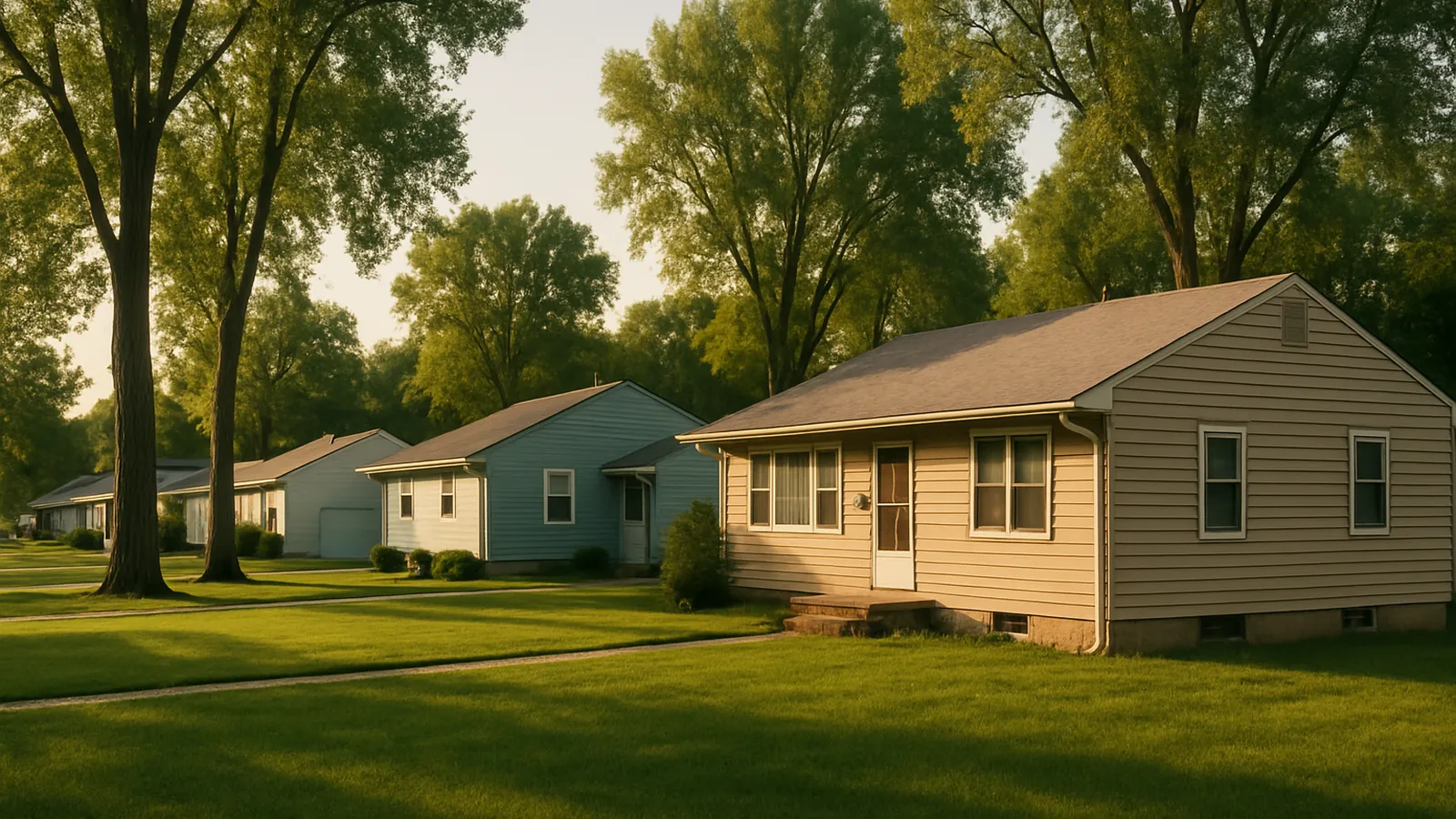
Most foundation repair in Topeka is not covered by homeowners insurance: standard policies exclude earth movement — the settling and swelling Kaw Valley clay does. The exception is a sudden covered peril, like a burst pipe washing out bearing soil. Excluded repairs run $4,000–$15,000.
The exclusion, the exception, the documentation — and the honest math on filing.
What the exclusion actually says
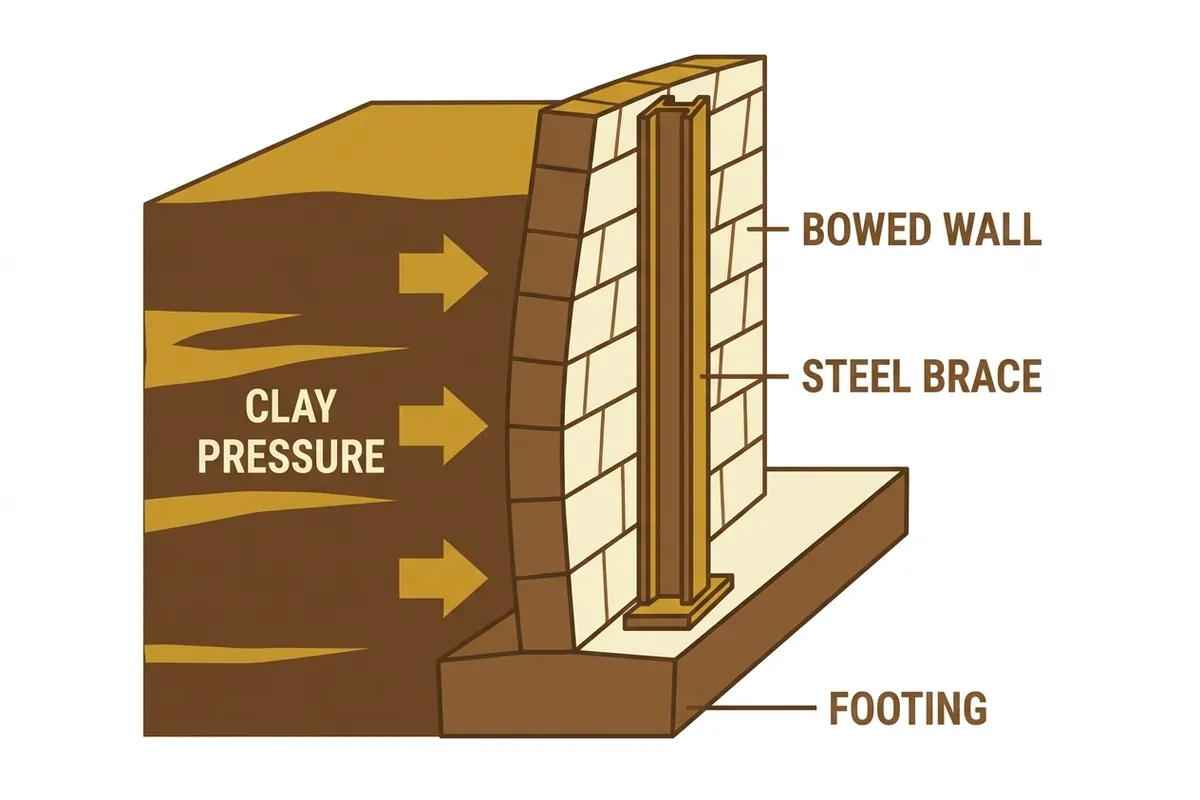
Standard homeowners policies carry an earth-movement exclusion: damage caused by settling, shrinking, bulging, expanding, or cracking of foundations is excluded — however gradual and however blameless you are. The insurance logic is that soil movement is a maintenance-class certainty on expansive clay, not a fortuitous event, and Shawnee County’s shrink-swell soils are the textbook case. The wet-spring, dry-summer cycle that drops footings and ratchets basement walls inward is, in policy language, excluded earth movement in slow motion.
Policies differ in wording and endorsements exist, so the authoritative text is your own policy’s exclusions section — we read foundations, not contracts, and this page is a contractor’s field guide, not coverage advice.
The exception: sudden, accidental, and wet
Where coverage genuinely appears is when a covered peril causes the movement. The common Topeka version: a supply line bursts, water saturates or washes out the soil under a footing, and the foundation drops. The discharge is sudden and accidental — a covered water peril on most policies — and foundation damage flowing directly from it is commonly covered with it. The same logic can apply to other covered events; what never qualifies is the slow version of the same story, the pinhole leak that fed the clay for five years.
Covered or not — the usual outcomes
| Cause of the damage | Typical outcome |
|---|---|
| Seasonal shrink-swell settlement | Excluded — earth movement |
| Clay pressure bowing a basement wall | Excluded — earth movement |
| Burst pipe washing out soil, footing drops | Commonly covered — sudden discharge |
| Slow plumbing leak feeding the clay for years | Usually excluded — not sudden |
| Surface flooding | Excluded from homeowners; NFIP flood policy territory |
| Poor drainage, ponding at the wall | Excluded — maintenance |
If you think your damage qualifies
- Stop the water and photograph everything — the failed fitting, the standing water, dates visible.
- Get the plumber’s written diagnosis naming the failure as sudden.
- Measure the movement now — crack widths, floor elevations. Our free evaluation produces exactly this record, and it’s yours whether or not you hire us or file.
- Then call the carrier — with evidence in hand, not before.
Paying for it when it’s excluded
Most Topeka foundation repairs are self-paid, which is why every number on this site is public: piers at $1,200–$3,000 each, walls at $2,500–$10,000, crack repair from about $400. The cost guide lays out what drives each range, and a written per-line scope means you can phase work — stabilize now, finish cosmetics later — without re-diagnosing anything.
If the denial letter comes back
A denial is a position, not a verdict. Ask the carrier in writing for the exact policy language behind it, because “earth movement” cited against a plumbing-discharge claim is the most reversible error adjusters make. What reverses it is a stamped engineer’s causation letter naming the covered peril — water escaping a line — and tying it to the damage you are claiming. Keep the distinction clean while you argue it: sump backup needs its endorsement, surface flooding is NFIP territory, and settlement from ordinary wet-dry clay movement is excluded almost everywhere. If the carrier still won’t engage, the Kansas Insurance Department takes consumer complaints — and your policy’s suit-limitation clause is running the whole time.
Insurance questions, straight answers
Does homeowners insurance cover foundation settling in Kansas?
Almost never. Standard policies exclude earth movement — settling, shrinking, expanding, or heaving soil — regardless of what caused it, and Shawnee County's shrink-swell clay is precisely what the exclusion describes. Read the exclusions section of your own policy for the exact wording; ours is a contractor's answer, not an adjuster's.
What's the exception that actually pays?
Sudden and accidental water discharge — a burst supply line or failed water heater that washes out soil under a footing. The water damage is a covered peril on most policies, and foundation damage flowing directly from it is commonly covered too. The words that matter are sudden and accidental: a slow leak that fed the clay for years usually isn't.
What should I document before calling anyone?
Date-stamped photos of the plumbing failure and standing water, the plumber's diagnosis in writing, and measurements of the new movement — crack widths, floor elevations. Adjusters distinguish sudden events from long-term seepage, and contemporaneous evidence is what makes that call go your way. We provide the measured half of that file free.
Should I file a claim for a small repair?
Run the math first. If the repair is $4,000 and your deductible is $2,500, the claim nets $1,500 and goes on your claims history. For border-line amounts many Topeka homeowners pay out of pocket and keep the record clean. For a $15,000 sudden-event repair, the claim is obviously worth pursuing — with the documentation above.
Does flood insurance cover foundation damage?
Separately, and only if you carry it. Surface flooding is excluded from homeowners policies entirely; NFIP flood coverage handles flood events but excludes most earth movement as well. In the Kaw valley's mapped flood areas that distinction matters — know which policy you're standing on before assuming either one applies.
Get a free Topeka foundation evaluation
Tell us what the house is doing — a basement wall leaning in, stair-step cracks, doors that stick every August, sloping floors — and we’ll schedule an evaluation with photos, wall measurements, and floor elevations. We reply the same business day.