Helical and push piers for Topeka foundation repair both run $1,200–$3,000 per pier — the choice is engineering, not price. Push piers drive to refusal under the house’s own weight, suiting heavy masonry; helicals screw to a measured torque, suiting lighter frame homes and additions.
How each one works, how each one proves itself, and which Topeka houses get which.
Two piers, two proofs
A push pier is steel tube driven hydraulically beside the footing, using the structure itself as the reaction weight, until it refuses to advance — refusal pressure logged per pier. The house’s weight is both the driving force and the proof: if the structure could push it deeper, it would have.
A helical pier is a steel shaft with welded helix plates, screwed into the ground by a hydraulic drive head. Installation torque correlates with soil capacity, so the installer reads the pier’s strength off the gauge as it turns. It doesn’t need the house’s weight at all — which is exactly why it fits the jobs push piers can’t.
Side by side
| Push piers | Helical piers | |
|---|---|---|
| How it advances | Driven, using the structure’s weight | Screwed in by hydraulic torque |
| Proof of capacity | Refusal pressure, logged per pier | Installation torque, logged per pier |
| Best structure | Heavier homes — two-story, brick veneer, full masonry | Lighter frame homes, porches, stoops, additions |
| New construction | No — needs existing weight | Yes — capacity proven before building |
| Vibration | Low, hydraulic not impact | Minimal — rotation, not driving |
| Typical Topeka cost | $1,200–$3,000 per pier | $1,200–$3,000 per pier |
Which Topeka houses get which
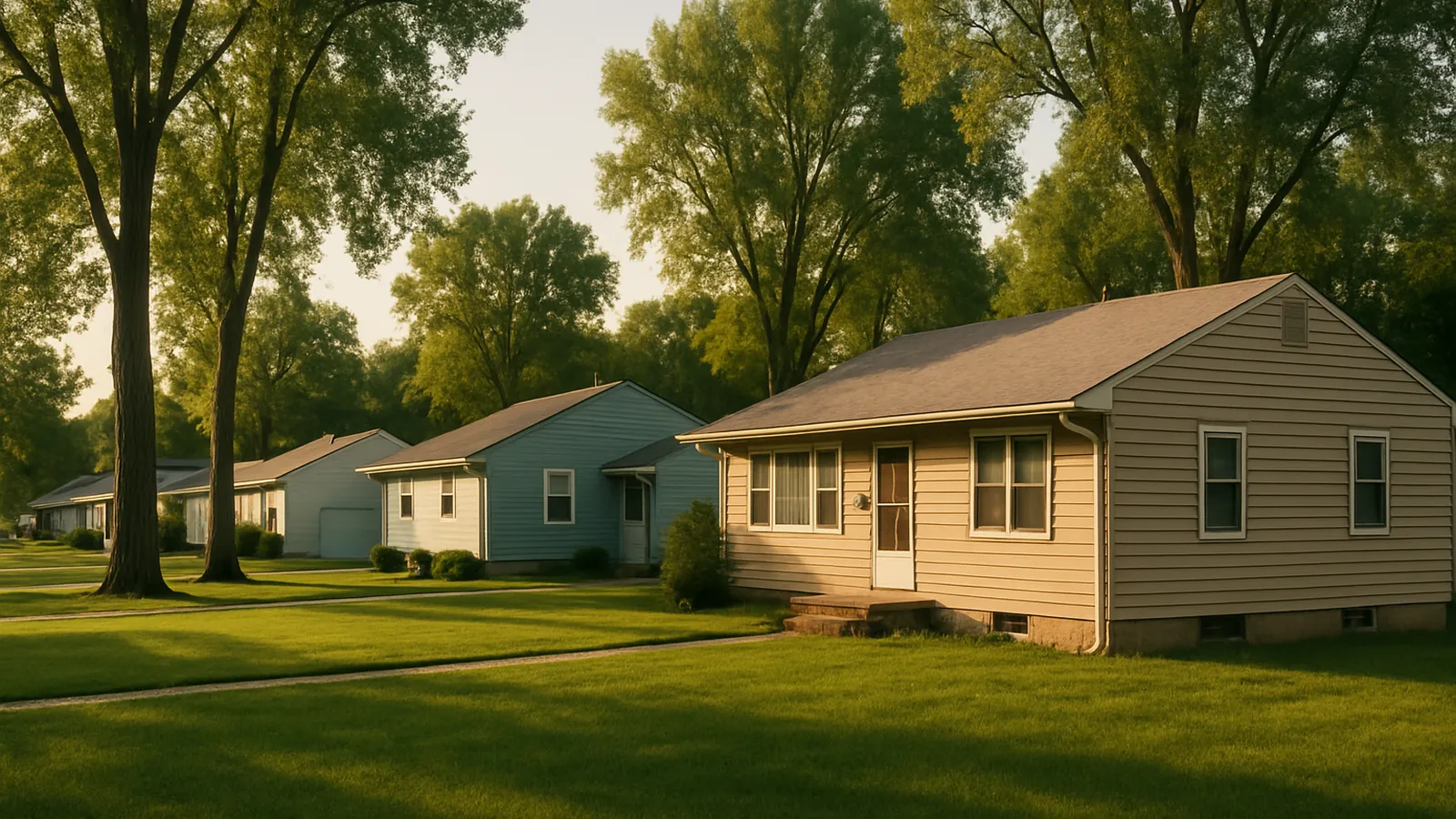
The post-war ranches across western Topeka are light — single story, frame, slab porches. Under one of those, a push pier may never reach true refusal because the house simply doesn’t weigh enough to drive it there; a helical proves its torque regardless. The older two-story brick stock in Potwin and College Hill carries the opposite logic: plenty of reaction weight, and refusal under that load is a strong proof. Porches, stoops, and chimney footings are almost always helical candidates — they’re light, and they fail on their own schedule apart from the house.
Depth is the other local variable. Stable bearing sits at different depths depending on which side of the Kaw you’re on — valley alluvium, glaciated ground to the north, shallower bedrock south — and deeper bearing means more pier sections at either type. That, not the pier itself, is usually what separates the low bid from the high one; our cost guide shows the arithmetic.
The honest answer: most repairs mix the question away
On a real Topeka settlement job the survey decides pier placement first — that story is on our settlement page — and the structure at each location picks the pier. A heavy main footing takes push piers while the porch two feet away takes a helical, on the same scope, under the same warranty. The pier log records both proofs. What we won’t do is force one type everywhere because it’s the one on the truck; the full mechanics of both installs are on the piering page.
What the pier warranty is actually worth
Read the warranty before the price. It covers the piers’ capacity — the supported section carrying its design load — not the whole house, and not the parts nobody piered. Four questions separate a real warranty from a brochure: is it transferable to the next owner, does the transfer cost a fee, does it cover the piered section or the structure, and does it survive the contractor going out of business (third-party-backed warranties do; handshake ones don’t). Ask whether it is conditioned on drainage maintenance you owe — a common and reasonable clause that homeowners meet for the first time during a claim. And keep the install log: depth and torque records are the evidence the warranty is written against.
Pier questions, straight answers
Which pier type is cheaper in Topeka?
Neither, reliably — both land in the $1,200 to $3,000 per-pier range, and the spread inside that range comes from depth to stable bearing and access, not from the pier type. Anyone selling one type as the budget option is quoting their inventory, not your soil. The right question is which pier proves its capacity on your house.
How deep do piers go here?
To refusal or to torque, not to a quoted number. Depths differ across the metro because the ground does: Kaw valley alluvium, glaciated deposits north of the river, and shallower bedrock south of it each put stable bearing somewhere different. The per-pier log — refusal pressure or final torque — is your record that each one got there.
Can helical piers be used for a brand-new addition?
Yes — that's their home turf. A new addition weighs nothing yet, so a push pier has nothing to react against, while a helical screws to capacity before the first block is laid. If you're planning an addition behind an older Topeka house, piering it at construction costs far less than piering it after it settles.
Do piers disturb the yard?
Less than people expect. Each location needs a working pit at the footing, and mature landscaping in older neighborhoods like Potwin or Westboro is the main access cost. Helical installation torques the pier in rather than driving, so vibration is minimal near fragile finishes. Pits are backfilled and the log tells you what happened below.
What warranty applies?
The piers carry a transferable warranty regardless of type, and the paperwork matters at resale — inspectors who know this soil ask whether a repair was engineered or guessed. Keep the warranty with the per-pier log. Ask every bidder for both in writing, including us, and compare terms rather than slogans.
Get a free Topeka foundation evaluation
Tell us what the house is doing — a basement wall leaning in, stair-step cracks, doors that stick every August, sloping floors — and we’ll schedule an evaluation with photos, wall measurements, and floor elevations. We reply the same business day.